Featured Project: Bringing Community Voices Into Renewable Energy Planning
- Image

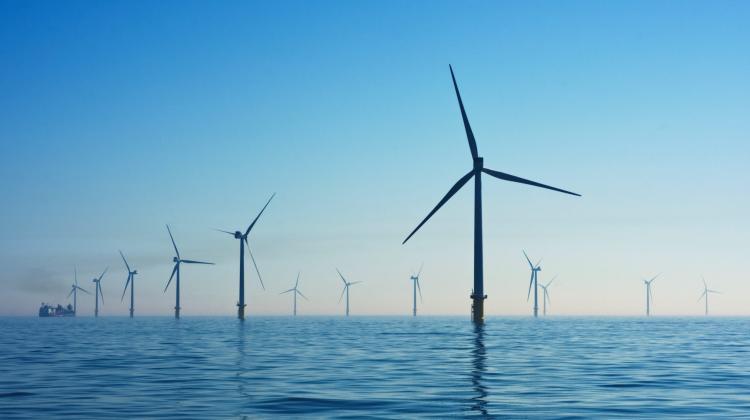
The US set ambitious renewable energy goals during the Biden administration, seeking a target of 80% renewable energy generation by 2030 and 100% carbon-free electricity by 2035.1 But as late as 2021, over 79% of total U.S. energy production was based on fossil fuel production services.2 While the federal offshore wind policy is undergoing a change, offshore wind turbines remain a critical component in shifting the sources of American electricity. The size of offshore wind turbines can be scaled much larger than their land-based counterparts, allowing offshore wind to offer a better economic value. However, offshore wind farms, often seen as less controversial than those on land, still generate controversy when sited due to their impact on nearby people and the surrounding landscape.
The MIT Renewable Energy Clinic, utilizing a nonpartisan approach, works with communities considering the building of offshore wind infrastructure to help uncover and address potential challenges an offshore wind project might encounter. Without advocacy or protest against any particular project, the clinic helps communities conduct a comprehensive stakeholder assessment to understand the range of views that exist in that community. They then help stakeholders in the community engage in face-to-face discussions to explore how the community can set rules that respect the interests of all its members.
The MIT Renewable Energy Clinic is a public service center in MIT’s Department of Urban Studies and Planning (DUSP). The team receives no financial compensation of any kind and has no political interest in the outcome of any proposed project. The clinic is staffed by MIT graduate students and led by DUSP’s Lawrence Susskind and Jungwoo Chun. “Capturing the diverse views of the community cannot be achieved by either the Town or the developer,” says Chun. “To fully understand the perspectives and diverse views of a community, an independent and neutral party must also engage. Through this neutral facilitation, we can help residents of the community define what a meaningful public engagement process should include.”
Chun is a Lecturer of Climate, Sustainability, and Negotiation. His research explores various aspects of climate change and sustainability with a particular focus on climate justice and resilience. Susskind is the Ford Professor of Urban and Environmental Planning. His research interests focus on the theory and practice of negotiation and dispute resolution, the practice of public engagement in local decision-making, cybersecurity for critical urban infrastructure, entrepreneurial negotiation, global environmental treaty-making, the resolution of science-intensive policy disputes, renewable energy policy, water equity in older American cities, climate change adaptation, socially-responsible real estate development and the land claims of Indigenous Peoples.
Learn more about the MIT Renewable Energy Clinic.